StarkEffects.com -Book Club

Suggested Reading for Modern Literacy

Great Books, Recommended by StarkEffects.com..

Welcome to the StarkEffects Book Club

These are the books that make up my (Troy Stark) personal reading list. I only recommend books I have personally read, enjoyed reading and believe to be important enough to spend your time reading.

Google
 
Web www.starkeffects.com
Articles by Subject Category

Science & Society Opinion Blog


Apple Store

Click Here For Physics Consulting Services. Experienced, professional physicist ready to help you solve your technical problems for business, education or research.

TELL ME MORE Free 2nd Day Shipping
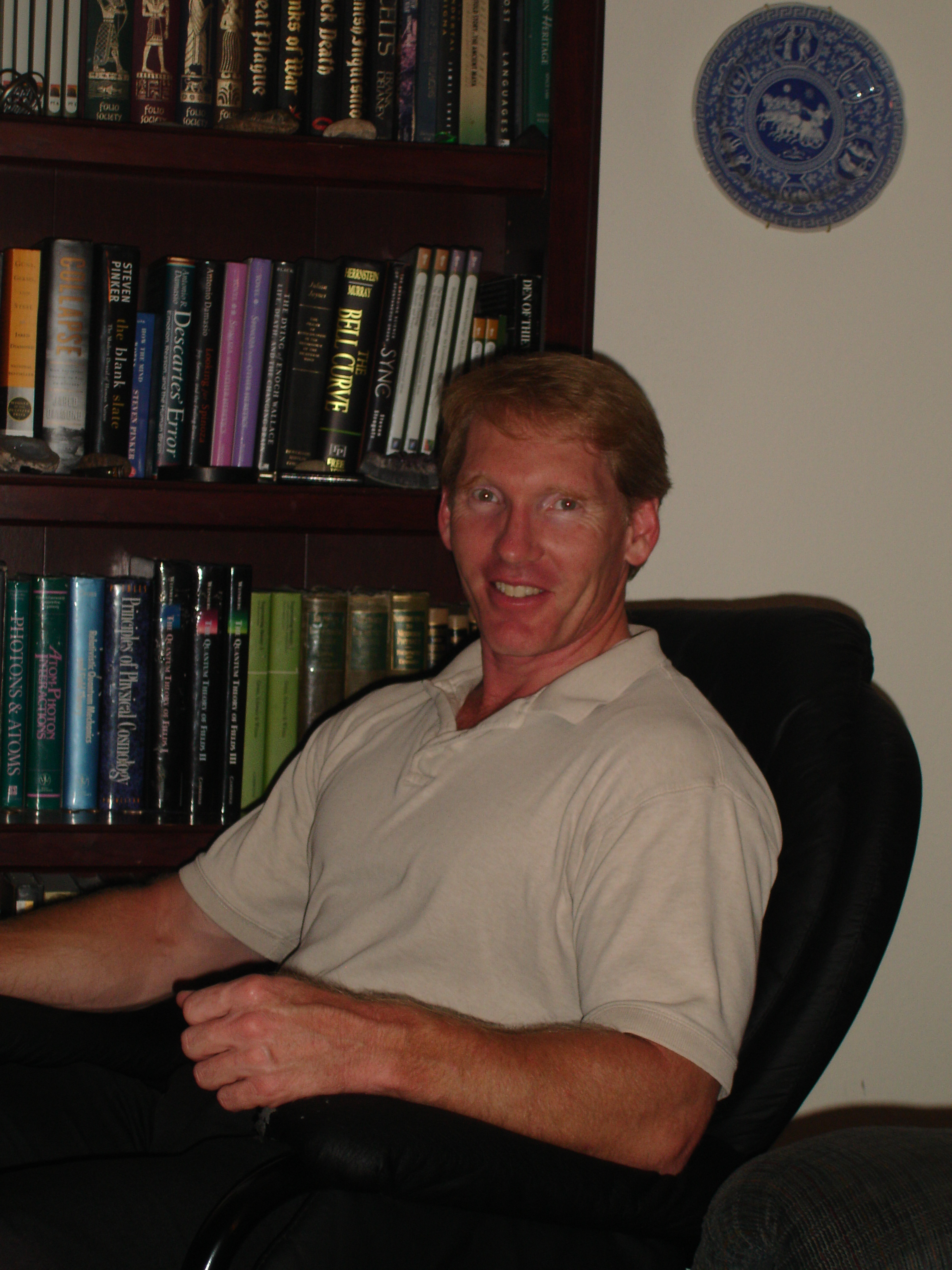
Now you can put a face with the name. This is the guy that runs this website. All the errors are his fault.


Become a content Contributor to the StarkEffects website! Improve the quality of content on the web. Contribute puzzles, articles, humor, diagrams or photos.
Buy a Tiny Wireless Video Camera & get a FREE Bonus

Click Here! to get all your Google ads for free!


Learning to Speed Read shouldn't take all day! This 16 minute speed reading course is effective and efficient. You will double your reading speed and actually improve your comprehension and it can all be done in 16 minutes. Click Here!

StarkEffects.com Book Club Reading List

Great Books

The Prism and the Pendulum by Robert P. Crease is a fun, detail filled tour of the people & motivations and history of some of the most beautiful experiments in science. This book explores the meaning of beauty and how scientific experimentation can be beautiful. I thoroughly enjoyed this light, yet informative read which re-connects humanity and science --- as if there was ever a disconnect.

The Genius Engine discusses one of the most critical sciences of this century.
This is a well written account of a complicated topic with important implications involving the impact of science on society. Much of the book relates recent research and results showing the functioning of the brain and which parts contribute what characteristics to your thoughts and decision making. Law and morality may both be informed and simultaneously twisted by this new knowlege. As an example: consider the criminal that can show his deficient prefrontal cortex or portions thereof contributed to his lack of respect for the law. He simply cannot be expected to act as a responsible citizen because his brain simply does not have that capacity so we have to let him go. Right? Whatever the answer is, we will be much better able to discuss these issues if we share a common understanding of how the mind functions and that common understanding will come through books like this one.

The Canon Is a wonderful journey through the basics of science that everyone should be familiar with. Best of all, Natalie's personality shows through in every paragraph making this a fun trip.

This was a FAVORITE of mine for a while.
The ideas flow so fluid and so alarming. Carl Sagan was seriously concerned about our future, and in this book tells us why we should be. We must overcome our lazy nature, and embrace our curious, active nature to ensure the best hope of our survival.

This is June 2006 and I have just read one of the most entertaining books you will ever find. It is called, “Stumbling on Happiness” by Daniel Gilbert. Gilbert is a Harvard college professor of psychology, and as you would expect from a Harvard professor, he is quick witted, well read, presents a clear thesis and defends it with style and substance. But, the best part is, this is a book you could read cover to cover in one sitting, just because it is so entertaining. Gilbert's personality, or the one you will see anyway, comes through wonderfully. The thesis: we are very lousy at guessing what will bring happiness. Explains alot don't you think?

Maybe the greatest friendship in history, but certainly not a well known history. The implications of Einstein's work may have been worked out no better by anyone than Einstein's close friend in his latter years, Kurt Godel.

There is a relatively new book (this is December 2005) that I am recommending. "The World is Flat" by Thomas Friedman is an excellent book with a great point of view on how we, as a nation, could not only survive economically but how we could thrive.  It will take some extreme effort but if we have the vision of where we’re going, we can do it!

One of my favorite books is this great work of political satire that is as relevant today as was when it was written. Jonathan Swift's "Gulliver's Travels" is extremely entertaining. Don't just read the first adventure with the Lilliputians, you should enjoy the whole book. It is great. (You may want to read it in private. It was rather embarrassing to be rolling on the floor with laughter in public.)

Charles Freeman's "The Closing of the Western Mind, The Rise of Faith and the Fall of Reason" is a wonderful historic view of how authority became supreme over critical thinking. This is by far one of my favorites.

Antonio Damasio's "Descartes' Error Emotion Reason, and the Human Brain" is quite entertaining and a great introduction to the latest thinking on cognitive neuroscience.

Along the same lines, but also adding a good introduction to a great philosopher, Anotonio Damasio's "Looking for Spinoza, Joy, Sorrow, and the Feeling Brain" was another wonderful book. I really love Damasio's explanations of how we think and especially the concept of representations of our whole physical self being the basis for thought.

"Guns, Germs, and Steel" discusses the Fates of Human Societies. Jared Diamond has presented a relatively deep overview of the development of our current and past human societies and their relationship to each other.

A very interesting look at the system that creates professionals, "Disciplined Minds" by Jeff Schmidt is a well written essay presenting his view of how professionals are made and what they are made for.

Howard Bloom's "The Lucifer Principle" describes human history from the point of view of evolution and natural selection as applied to ideas and societies.

As far as political books go Thomas Sowell's "The Vision of the Annointed" is one of my favorites.

"Evolution , the Triumph of an Idea" by Carl Zimmer is a beautifully illustrated, well written, entertaining introduction to evolution. It covers the concept from the time of Charles Darwin to modern times, describing what is known and what is not understood. This is fun reading!

Steven Pinker's "The Blank Slate" shows the development of how we think about how we think. Subtitled "The Modern Denial of Human Nature" a main theme is that we have not given enough credit to our genes and the structure of our brains with regard to our personalities. Possibly a few more pages than it needed, but still great reading.

A controversial book, "The Bell Curve" is worth reading. Herrnstein & Murray put alot of information in this book to back up their thesis. If you do get to this one, the first thing to do is read the first section of each chapter. This gives you the thesis and then you can go back and wade through the data they cite to back up their ideas. In a nutshell, inherent intelligence is emerging as a new societal discriminator. Bad or good, I don't know, but possible? I think they may be right.

"Sync the Emerging Science of Spontaneous Order" by Steven Strogatz was a beautiful introduction a new mathematical and physical science concept.

Ira B. Black M.D. wrote a very interesting book on the subject of Alzheimer's and other brain disorders. "The Dying of Enoch Wallace---Life, Death and the Changing Brain" is a human story in and a human and research story describing what is being learned about debilitating brain disease.

I really enjoyed "The Origin of Consciousness in the Breakdown of the Bicameral Mind" by Julian Jaynes. It introduced an idea that was new to me. I would like to see the idea more fully developed, or to maybe understand why it can't be, but still, the book was a good read.

James B. Stewart describes the financial world as it was rocked by Milken, Boesky, Siegel and others in "Den of Thieves"

"The Science of Good and Evil" by Michael Shermer describes an atheistic view of morality. He argues that religion and God or gods are not necessary for, and perhaps form a lacking basis for morality. Instead, a stronger basis for morality can be found in human nature.

"The Gifts of the Jews" by Thomas Cahill describes the legacy all humanity has inherited from a tribe of desert nomads.

Thomas Cahill's "How the Irish Saved Civilization" is a great history story about the role of the Irish after the fall of Rome.

"The Crisis of Islam" by Bernard Lewis is essential reading for understanding today's middle east.

A short light read, just the right size for a weekend, “Nature’s Numbers” by Ian Stewart is both entertaining and thought provoking.

Comments, Suggestions, Criticisms and Complaints Welcome: Webmaster at Stark Effects
Related Info & Products

Get this wonderful home study course on human anatomy in 3-D on your computer before the price goes up!.
Phases of the Moon. Sophisticated Software for calculating the phases of the moon and a host of other lunar info.
Click Here! for Great Science Fair Project Ideas.
StarkEffects, Only The Best!
Google
 
Web www.starkeffects.com
Affiliate Programs •  SEO •  Banner •  Advertising •  Resources
© Copyright 2006  StarkEffects, All Rights Reserved The SiteMap